- Home
- About Me
About Carol Leather
I'm Carol. I'll help you notice the wildlife that's already around you, and come home from your next walk with photos that feel like the moment.
Some days feel wonderfully alive: birds calling, a flash of wings, a beetle working its way through the grass. Then you get home and the photos look disappointing. Blurry. Too far away. Nothing like the moment.
If you leave here noticing more wildlife, and closing the gap between how the day felt and how your photos turned out, I've succeeded. Along the way you'll pick up simple camera skills and ethical fieldcraft, and find that the experience matters more than the evidence.
You might have noticed that wildlife once common is now a treat to spot, and something in you wants to start recording what's still here.
This site is for people who've been too busy to look, until now. You'll feel at home here if:
- You're curious about wildlife but don't know what you're looking at yet, and you don't want to feel foolish for not knowing the names
- You want simple, local places to go, without needing specialist kit or expert knowledge
- You'd like to take photos you can look back on in years to come
- You care about wildlife, and you want to learn how to observe and photograph it responsibly
Plenty of people fit more than one of those. You'll find something useful wherever you start.

What you'll find here
Everything here is designed for self-guided learning, focused on the wildlife that lives where most of us actually are: gardens, parks, towpaths, ponds, meadows, and local reserves. Birds and insects most of all.
On the site you'll find:
- Local area guides: where to walk, what habitats to look for, and what you might see there
- What to look for by season: the small signs that tell you what's happening, like tracks, calls, behaviour, and fresh growth
- Photography for non-photographers: simple before-you-shoot checks that make a big difference
- Ethical wildlife photography: how to get the moment without stressing, chasing, feeding, or disturbing the subject
- Stories behind the photos: because noticing is the point, and a photo is one way we bring the day home
My aim is to help you come away with two things: a stronger sense of what's around you, and a way to capture it that doesn't do harm.
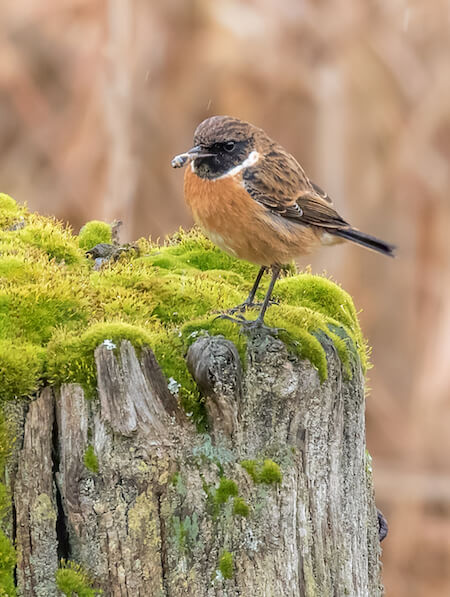
Male stonechat
How it started
My grandad gave me my first film camera when I was seven. He took me out walking and taught me to listen first: to notice what I was hearing and seeing, and to read tracks in the ground and the snow.
He could name a bird from its call and tell who'd been around from the signs they left behind. He taught me how to notice what most people walk past.
I taught myself photography back when nothing was automatic: no autofocus, no built-in light meter, no screen on the back of the camera. I'd write down my settings after each shot, then match them up with the prints when they came back.
These days I shoot digital and review the results in Lightroom, but I'm still learning the same way I always have: by paying attention, trying again, and seeing what works.
Years later, I filled my first external hard drive with photographs, thousands of them, sitting there of no use to anyone but me. Going back through them, I found a lot of hard-won lessons, from the failures as much as the good shots. And some of the things I'd photographed, things that once felt ordinary, were getting harder to find.
I wanted to put those skills, mistakes, and practical know-how to use, so more people can notice what's here now, and remember it properly.
Of course, not every shot is a winner. I'm still not sure that photographing a short-eared owl mid-poop is quite what Henri Cartier-Bresson meant by "The Decisive Moment."
What almost 60 years outdoors showed me
Over the years I've been lucky to have my work recognised. My robin photograph was chosen for the Beds, Cambs and Northants Wildlife Trusts calendar. I won prizes at Paxton Pits nature reserve, and took first place in a local newspaper wildlife photography contest. One photo was featured on a TV weather forecast, another published in Canon EOS Magazine.
What I share here comes from all of that:
- How to slow down and see what's happening around you
- How to read small clues: sounds, movement, tracks, behaviour
- How to photograph wildlife in a way that puts the animal first
My one rule
If the choice is between getting a photo and causing stress or disturbance, the photo doesn't matter. There will be other moments, and the wildlife deserves the chance to keep living its life.
Where to start
However you arrive, browse, follow your curiosity, and take it one walk at a time. If you'd like a door in:
Your starting point if you're thinking "I don't know where to go, what I'm looking at, or how to photograph it".
Getting into Wildlife Photography
Practical camera and field tips to help your photos feel more like the moment.
A hub of guides, stories, and photo tips for the species you're most likely to meet.

Step Behind the Wild Lens
Seasonal field notes from my wildlife walks: recent encounters, the story behind favourite photos, and simple, practical tips you can use on your next outing.
Copyright © 2018- naturewalkswithcarol.com All rights reserved
Home. | About Me | Contact Me | Blog | Privacy Policy