- Home
- Where to see Wildlife
- Northamptonshire walks
Best Walks in Northamptonshire
Northamptonshire sits in the heart of England: pretty villages with thatched roofs, country lanes, ancient woodland, river valleys and quiet canals. We've been exploring these trails since the 1980s. Here are ten of our favourite walks, with the wildlife we've found along the way.
Quick picks, jump to a walk:
- Barnwell Country Park: kingfishers, otters and gentle bird hides
- Glapthorn Cow Pastures: quiet scrub and woodland, away from the crowds
- Titchmarsh LNR: lakes and hides near Thrapston
- Nene Way: a long riverside trail along the River Nene
- The Nene Valley Living Landscape: lakeside walks across the valley
- Summer Leys Nature Reserve: a popular birdwatching reserve in the Nene Valley
- Irchester Country Park: woodland trails to choose between
- Twywell Hills and Dales: a former ironstone quarry, now grassland and dales
- Fermyn Woods: ancient woodland, home of the purple emperor butterfly
- Brixworth Country Park: family-friendly park beside Pitsford Water
Before you set off: Check the nature walk checklist so you've got everything you need.
The locals call Northamptonshire the Rose of the Shires, though the county flower is actually the humble cowslip, not a rose. We moved just beyond the county's eastern border in the 1980s and have been exploring one trail at a time ever since. Every photo on this page is my own, taken on location during our walks.

Barnwell Country Park
This is one of our regular destinations "across the border" from our Cambridgeshire home.
Just outside Oundle town centre, Barnwell Country Park offers short circular walks around scenic lakes and alongside the River Nene. It's popular with families and dog walkers, and there's a café, toilets, and a play area for the kids.
Barnwell is where I followed a pair of great crested grebes through a whole breeding season, from their courtship display to the chicks riding on their parents' backs.
On busy weekends, especially in summer, the wildlife becomes surprisingly tolerant of people. That's why you might just spot a kingfisher, or even catch a rare glimpse of an otter.
A Christmas surprise I'll never forget
One Christmas Day, I wrapped up warm and walked to the Kingfisher Hide alone. It was far too cold for my husband to join me. I sat for hours, watching and waiting in the stillness.
Then, just when I least expected it, an otter appeared, swimming playfully in the cold water. I watched in amazement as it caught a fish, then carried it to a patch of dry land under the bushes to eat in peace.
It felt like the best Christmas present I could have asked for.
Glapthorn Cow Pastures
If you prefer peace and quiet, Glapthorn Cow Pastures might be more your style.
This woodland reserve, once part of the royal Rockingham Forest, lies just north of Oundle. It's managed by the Wildlife Trust and is one of the few places you might spot the elusive black hairstreak butterfly in summer.
Despite the name, there are no cows here, but you might hear nightingales or see spring wildflowers like bluebells, primroses, and orchids along the woodland paths.
If you enjoy ancient woodland, Monks Wood across the border in Cambridgeshire is another excellent option with a similar feel.
Titchmarsh LNR
Heading west from Oundle, Titchmarsh Local Nature Reserve sits just outside the town of Thrapston.
You can access the reserve from nearby Aldwincle, but parking there is limited, and the potholes can be a challenge! For an easier option, park in Thrapston and enjoy a scenic walk in. From the town, keep the River Nene on your left and Thrapston Town Lake on your right. Follow the wide footpath until you reach a bridge. Cross the river, turn right, and pass through the kissing gate. You've arrived.
There's a lovely circular walk around the lakes, about 3 to 4 miles, mostly along grassy paths (which can get muddy in winter).
In summer, this is one of the best spots to see and photograph Banded Demoiselles and other dragonflies. In winter, large flocks of ducks gather here, and by February, the loud calls of breeding herons fill the air.
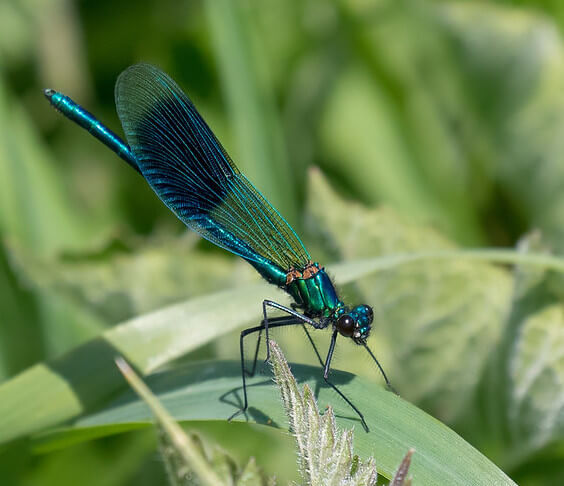
Male Banded Demoiselle, one of the summer highlights at Titchmarsh
Nene Way
Did you read that as Neen or Nenn? You'll hear it both ways, and whichever one you choose, someone will swear you're wrong!
The Nene Way is a 70-mile long-distance trail that follows the river from Badby in the west to Wandsford near Peterborough. I've not walked the entire thing (70 miles is quite a commitment!), but those who have say it's one of the best long walks in Northamptonshire.
A particularly scenic 14-mile section runs from Barnwell to Wandsford. Along the way, you'll pass the site of Fotheringhay Castle. Though dismantled in the 1630s, its motte remains, and it holds a dramatic past:
- Richard III was born here
- Mary Queen of Scots was executed on the grounds
It's a stretch that blends quiet countryside with powerful history.
The Nene Valley Living Landscape
If you're looking for lakeside walks, the Nene Valley is an excellent place to start.
Kinewell Lake
Near the village of Ringstead, Kinewell Lake is a former gravel pit turned wildlife haven. It's now both an SSSI and SPA, home to many protected bird species. The 1.5-mile trail around the lake is short, peaceful, and ideal for a relaxed stroll. Dogs are welcome, but please keep them on a lead during the summer bird breeding season.
Stanwick Lakes
Further along the valley, Stanwick Lakes is a countryside attraction and nature reserve with lots to offer. It's one of the best places in Northamptonshire to walk with children: adventure play areas, a visitor centre, hard-surfaced accessible paths, and plenty of ducks, geese and other waterbirds across its 15 lakes and ponds.
Nene Wetlands & Rushden Lakes
You can continue your walk from Stanwick Lakes into the Nene Wetlands, which includes four nature reserves managed by the Wildlife Trust. This unique area even borders Rushden Lakes Shopping Centre, a rare blend of wildlife and retail! Lakes and islands, meadows and reed beds, woodland paths. It's a walk with surprising variety.
Summer Leys Nature Reserve
Summer Leys is another popular reserve in the Nene Valley, and a favourite among birdwatchers.
The main lake is a flooded gravel pit, surrounded by two smaller ponds and a specially designed wader scrape. In spring and summer, keep an eye out for lapwings and redshanks nesting here. If you're lucky, you might catch a glimpse of their chicks darting around the water's edge.
The lake is a good place to watch mute swans at close range.
Rare birds often turn up here too, including the elusive Bittern, the elegant Glossy Ibis, and the Curlew.
Weekends can be busy, but once you're on the trail, it's easy to find a peaceful rhythm, especially if you stop at one of the bird hides tucked along the lakeside.
The walk forms a circular route: bird hides line one side of the lake, and an old railway path runs along the other. The paths are called "all weather," but they can still get muddy in winter, so wear boots or sturdy shoes. If you explore past the bird feeding station, you'll cross a grassy meadow with kissing gates at both ends. It's a beautiful stretch, but it can become very waterlogged after rain.
Irchester Country Park
There are three woodland trails to choose from here:
- The Easy Access Trail: a short, 15-minute loop
- The Woodland Trail: slightly longer, with gentle inclines
- The Ironstone Heritage Trail: a 2.5-mile route with historical interest
This area reflects Northamptonshire's history with ironstone, a sedimentary rock rich in iron ore. You'll see evidence of old quarries throughout the park.
The Ironstone Heritage Trail also passes the Railway Museum (free to enter), where you can see narrow-gauge trains and indoor exhibits. The volunteers here are always generous with stories and knowledge.
There's a café and toilets near the car park. We find it's well worth getting the annual parking permit, which gives you unlimited access to all of Northamptonshire's Country Parks.
Twywell Hills and Dales
Once an ironstone quarry in the early 20th century, Twywell Hills and Dales is now a designated SSSI, and a real hidden gem for nature lovers.
This is one of the best places in Northamptonshire to spot butterflies. Look out for Dingy Skipper, Grizzled Skipper, Common Blue, and the elusive Green Hairstreak.
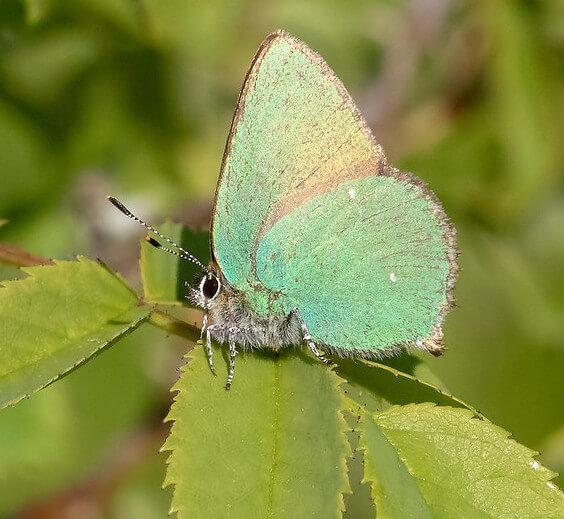
The beautiful Green Hairstreak. Still the only one I've ever seen
If butterfly spotting has you hooked, the rarest prize in the UK is the swallowtail butterfly, which you can find in the Norfolk Broads.
A butterfly encounter to remember
On one visit, we'd chatted with a fellow photographer who kindly pointed out a Dingy Skipper, my first ever sighting. So small, but so full of character.
Later, as we followed butterflies deeper into the gullet, an overgrown, sun-dappled pathway, we spotted our new friend ahead. After a while, he turned and walked back toward us, beckoning with a quiet smile.
He had found a Green Hairstreak, holding its ground, guarding its little patch of sunlight. Thanks to him, we saw it up close and managed a few photographs. A truly special moment shared with someone who understood the joy of spotting the rare and beautiful.
Terrain & access
As the name suggests, the area features steep hills and uneven ground. Paths are unsurfaced and can become very muddy in wet weather, making it unsuitable for wheelchairs or pushchairs. Free parking is available from dawn till dusk. No public toilets. Dogs are welcome, but at certain times of year, livestock may be grazing, so leads are essential.
Fermyn Woods
Just west of Oundle, near Corby, you'll find Fermyn Woods, once known as Brigstock Country Park. Good news if you have a parking permit: it's valid here too!
Woodland walks often mean unpredictable weather. Our guide to wildlife photography in the rain covers how to keep shooting when the skies open.
Choose your woodland walk
Fermyn offers three trails, each starting from the car park (with a café and toilets nearby):
- A short stroll for a gentle outing
- A medium loop through forest paths
- A longer walk that links into nearby trails and the Lyveden Way
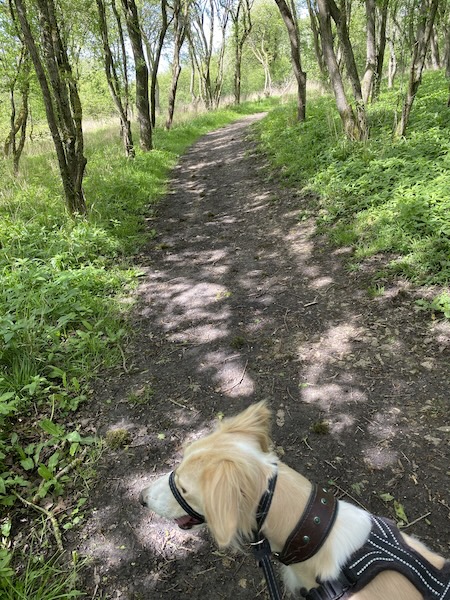
A peaceful walk through Fermyn Woods. Dogs are welcome, just bring good boots!
As you explore, look out for Red Kites soaring overhead, Purple Emperor butterflies in July high in the treetops, fallow deer quietly crossing the woodland rides, and if you're lucky, Great Crested Newts in the pond.
One unforgettable newt hunt
There are two ponds we know of in the park: one larger one that draws in the local fishermen, and a much smaller one tucked beside the trail. That little pond is home to Great Crested Newts, and we've only seen them once.
But what a day that was. Every so often, a newt would rise slowly from the muddy depths, hover just at the surface for a moment, and then vanish again. The water was unusually clear that day, and I spent over an hour trying to photograph them.
I didn't have much success, but it's become a bit of a family joke now: "Don't tell Carol there are newts in there or we'll never get home!"
A gentle reminder: Great Crested Newts are protected by law in the UK. Please enjoy them from a distance and avoid disturbing their habitat.
A hidden historic gem: Lyveden New Bield
Just beyond the woods lies Lyveden New Bield, a hauntingly beautiful unfinished Elizabethan lodge owned by the National Trust. It was meant to be part of an elaborate moated garden design. I've spent many happy hours near the moats, watching dragonflies patrol the still water.
The Lyveden Way Trail
Fermyn is also the starting point for the Lyveden Way, a longer circular route that skirts Lady Wood (a favourite of the Purple Emperor and White Admiral butterflies), passes through Lilford Woods, winds its way toward Wadenhoe, then returns across open fields to Fermyn Woods Country Park. It's a peaceful yet rewarding long walk, especially for those who want to blend nature, history, and a bit of solitude.
Brixworth Country Park
Just 5 miles north of Northampton, Brixworth Country Park and the adjoining Pitsford Water Nature Reserve surround a large drinking water reservoir, perfect for peaceful walks and birdwatching.
A causeway splits the site into two distinct areas:
- Brixworth Country Park: family-friendly, accessible, and dog-friendly with wide hard-surfaced paths, a café, play areas, and toilets
- Pitsford Water Nature Reserve: quieter and more wildlife-focused, but requires a Wildlife Trusts permit (no dogs allowed on this side)
If you're after both convenience and wildlife, this is a great destination with something for everyone.
More Parks to Explore
There are still a couple of Northamptonshire country parks we've yet to explore, but they're firmly on our list!
Brampton Valley Way
- A 14-mile linear trail along the old Northampton to Market Harborough railway
- Includes two unlit tunnels, so take a torch and watch for cyclists!
- Ideal for longer-distance walkers and those who enjoy heritage routes
Sywell Country Park
- Once a reservoir, now a compact country park with a 2.7-mile perimeter walk
- Features include a pond, a butterfly garden, and an arboretum
- Smaller than Pitsford, but sounds promising. We'll report back once we visit!
Northamptonshire is just one corner of the map. If you fancy wandering further afield, I'm gradually charting where to see wildlife in other English counties, one walk at a time.
Walking gently: Many of the species mentioned here, like otters, nesting birds, and Great Crested Newts, are protected by law or vulnerable to disturbance. Please keep dogs on leads in wildlife-sensitive areas, especially during spring and summer. If you're photographing animals, a quiet distance and patience make all the difference, and help keep them safe. Thank you for caring as you explore.
Seen Something Special?
I always enjoy hearing from fellow nature lovers, especially when someone spots something on their Northamptonshire walks. If you'd like to share your sightings or tips, feel free to get in touch. Who knows, you might even spot the next otter or Purple Emperor before I do!
Further Reading
Wildlife including kingfishers and otters on this scenic lakeside walk near Oundle
One of the few UK homes for the Purple Emperor butterfly, plus woodland trails
A wonderful spot for walking and birdwatching around the reservoir
Guides to Fens, Washes, Woods and Meadows across the county
What equipment you need and how to take beautiful butterfly photos
Spot chiffchaffs, woodpeckers, nuthatches, goldcrests and more on a spring walk
About the Author


Step Behind the Wild Lens
Seasonal field notes from my wildlife walks: recent encounters, the story behind favourite photos, and simple, practical tips you can use on your next outing.
Copyright © 2018- naturewalkswithcarol.com All rights reserved
Home. | About Me | Contact Me | Blog | Privacy Policy