- Home
- Wildlife in the UK
- How to Identify Wild Birds
- What bird is this?
What Bird Is This? Identify Common UK Garden Birds by Sight and Sound
Spotted a bird in the garden and not sure what it was? This quick guide helps you identify common UK birds by colour, size, habitat, and sound. Start with the colour you saw, then narrow down by size and where it was. Seen it among the trees rather than at the feeder? Try my guide to British woodland birds, or learn to read their beaks and what each shape is for.
Filter by:
Seen at the Feeder?
Here are some of the most common UK garden birds you're likely to spot visiting feeders, especially in autumn and winter:
- 🟨 Blue Tit: bold little acrobat, loves peanuts and fat balls
- 🟨 Great Tit: larger, with a black cap, yellow chest with black stripe
- 🟨 Goldfinch: flocks to nyjer seed, red face and yellow wing flash
- 🟨 Siskin: streaky yellow-green, loves nyjer and sunflower hearts
- 🟥 Robin: bold and curious, especially in winter, attracted to mealworms
- 🟥 Bullfinch: quiet and stocky with a pink chest, will visit platform feeders
- 🟥 Long-tailed Tit: loves fat balls, often in a flurry of fluffy friends
- 🟫 House Sparrow: noisy flock, loves seed mixes
- 🟫 Dunnock: shy ground feeder, often under the bird table
- 🩶 Nuthatch: blue-grey above, peach below, climbs down trees headfirst
- 🟫 Chiffchaff: not a regular feeder bird, but seen near gardens in spring
- ⚫ Coal Tit: quick and nervous, dashes in and out
- ⚫ Blackbird: mostly on the ground, loves suet and fruit, will sometimes hop up on a platform feeder
- ⚫ Great Spotted Woodpecker: bold and unmistakable, clings to peanut feeders and fat balls
- ⚫ Starling: glossy and speckled, arrives in noisy, hungry flocks
- 🟩 Greenfinch: chunky and bright, enjoys sunflower hearts
🟨 Yellow Birds
Bright and cheerful, yellow birds often catch the eye at feeders or out in open countryside. These colourful visitors include some of the UK's most recognisable species, from bold wing flashes to entire yellow heads!
🔴🟨 European Goldfinch

What to Look For:
Bright red face, yellow wing bar, slender beak
Often seen in small flocks, flitting between feeders
Where You Might See It:
Garden feeders, weedy patches, parklands
Sound:
Tinkling twitter
🎧 Hear it »
🟨 Yellowhammer
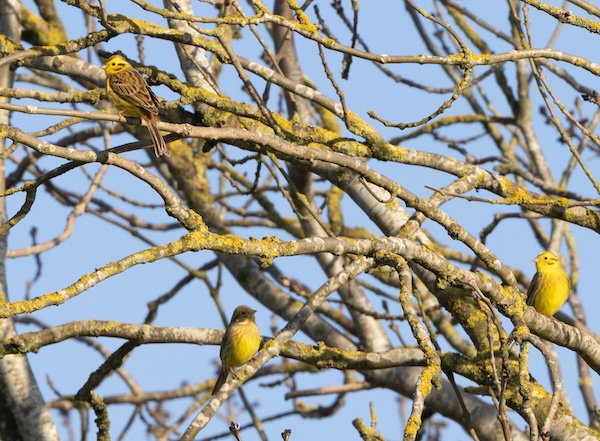
What to Look For:
Yellow head and breast, brown streaky back
Sings from hedges with upright posture
Where You Might See It:
Farmland, hedgerows, countryside edges
Sound:
“A-little-bit-of-bread-and-no-cheese”
🔝 Back to top
🟨 Great Tit

What to Look For:
Yellow belly with bold black stripe down the middle
Glossy black head and white cheeks
Larger than a Blue Tit, with a louder personality!
Where You Might See It:
At feeders, in woodlands, hedgerows and parks
Often the first to grab seed or fat balls
Sound:
Two-note “teacher-teacher” call, loud and repetitive
🟨 Blue Tit

What to Look For:
Bright yellow belly, blue cap, wings and tail
White cheeks and a thin black eye stripe
Very acrobatic, often seen hanging upside down!
Where You Might See It:
Common at feeders, especially in winter
Also found in parks, gardens, hedgerows and woodland
Sound:
High-pitched, trilling “tsee-tsee-tsee” and scolding calls
🎧 Hear it on RSPB »
🟨🟩 Siskin (Male)

What to Look For:
Small, streaky yellow-green finch with a bright yellow breast and yellow wing bars
Males have a neat black cap and small black chin
Slimmer than a greenfinch, with a fine pointed bill and a forked tail
Where You Might See It:
Garden feeders, where it loves nyjer seed and sunflower hearts
Also alder and conifer woodland, often in busy little flocks in winter
Sound:
Twittering, wheezy song with a long downward “tseee”, and chattery calls in flight
🎧 Hear it on RSPB »
🆚 Greenfinch vs Goldfinch: How to Tell Them Apart
These two garden finches are often seen at feeders, both greenish, both frequent visitors, but once you know the clues you can tell them apart:
- 🔴🟨 Goldfinch: Smaller and slimmer, red face, bold yellow wing bar, sings a light twittering song
- 🟩🟨 Greenfinch: Chunkier and larger, olive-green body with some yellow in wings, sings a harsh wheeze (“dzwee”)
They may visit feeders at the same time, especially in winter, so watch for size, colour, and sound!
🔴 Red/Pink Birds
Some of the most iconic British birds wear red, from the festive robin to the flash of a bullfinch. Look out for their bold markings in winter and early spring especially.
🔴 European Robin
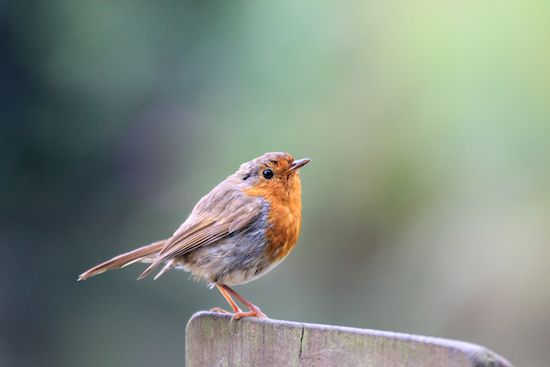
What to Look For:
Red-orange chest and face, round body, thin legs
Where You Might See It:
Garden feeders, woodland edges, perched on spades!
Sound:
Varied warble, sings year-round
🔝 Back to top
🔴 Chaffinch (Male)
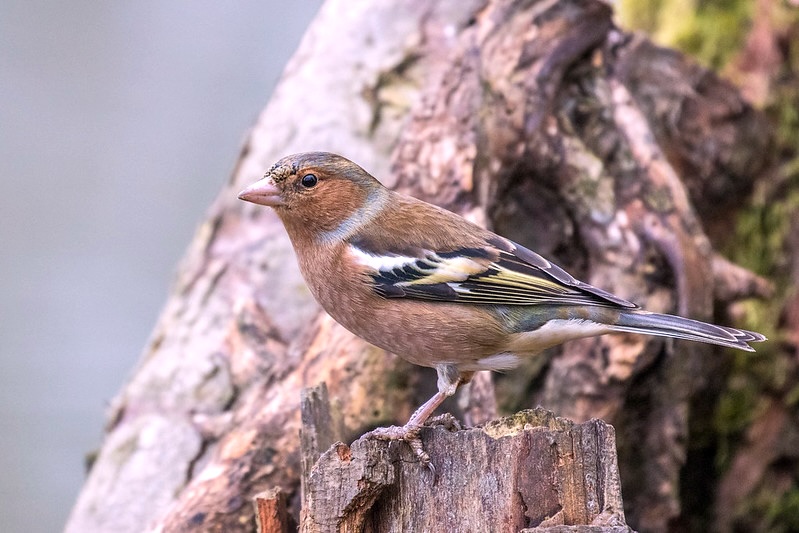
What to Look For:
Pink breast, grey-blue head, white wing bars
Where You Might See It:
Woodland edges, gardens, hopping under feeders
Sound:
Upward trill ending in a flourish
🎧 Hear it »
🔴 Long-tailed Tit
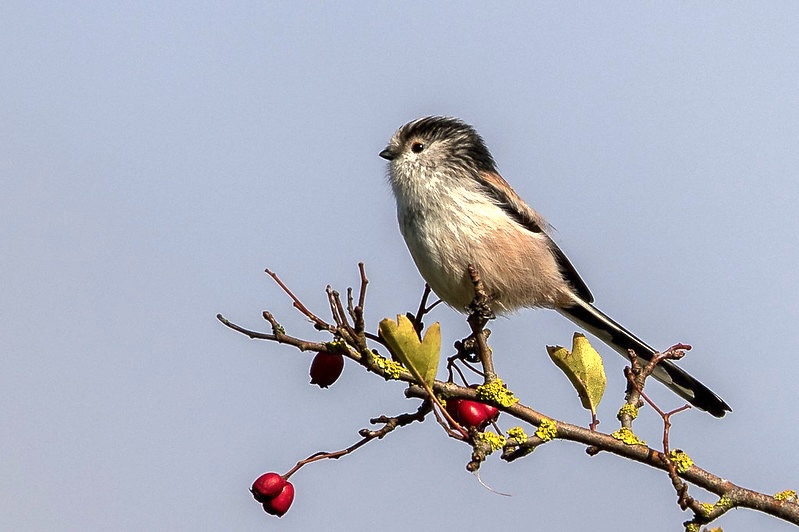
What to Look For:
Tiny, round body with a very long tail
Fluffy white face, dark wings, and soft pink flanks
Usually seen in small, excitable groups
Where You Might See It:
Garden feeders (especially fat balls), hedgerows, and woodland edges
Common in winter mixed flocks with Blue and Great Tits
Sound:
High-pitched “see-see” calls and soft twittering
🎧 Hear it on RSPB »
🔴 Bullfinch (Male)

What to Look For:
Bright pink-red chest, black cap, stubby beak
Grey back and white rump visible in flight
Females are more muted brown with the same shape
Where You Might See It:
Woodland edges, orchards, and thick hedgerows
May visit feeders quietly in pairs, especially in winter
Sound:
Soft, short, mournful whistle, “peu”
🎧 Hear it on RSPB »
🩶 Nuthatch

What to Look For:
Blue-grey back and head, with warm peach underparts and chestnut flanks
Bold black eye-stripe and a strong, dagger-like bill
The only bird that climbs down tree trunks headfirst
Where You Might See It:
Mature woodland, parks and larger gardens
Comes to peanut feeders, often calling loudly before you spot it
Sound:
A loud, ringing “dwip dwip” and a fast trilling whistle that carries through the trees
🎧 Hear it on RSPB »
🔴 Goldfinch Face?
Noticed a red face at the feeder?
It’s likely the Goldfinch, colourful all over, but listed in the Yellow section!
🔴 Red-Capped Visitor?
Could be a Green Woodpecker, that red crown is striking, but it's mostly mossy green.
Find it in the Green Birds section!
🟫 Brown Birds
These subtle-toned birds might not stand out at first, but they’re some of the UK’s most charming and rewarding to spot, especially in gardens and hedgerows.
🟫 Wren

What to Look For:
Tiny, round body, upright tail, loud voice for its size
Where You Might See It:
Near shrubs, brambles, or stone walls
Sound:
🎧 The typical trill of the wren, joined at the end by a Great Tit.
🔝 Back to top🟫 Dunnock (Hedge Sparrow)
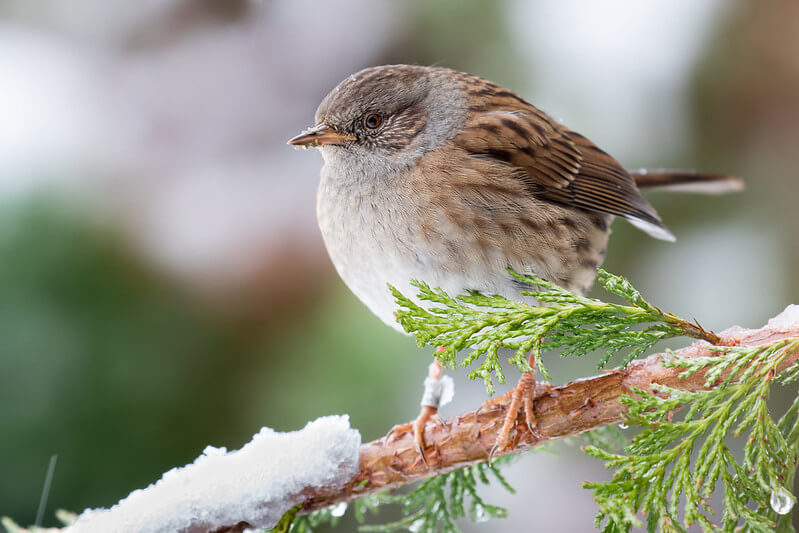
What to Look For:
Slim, brown back, grey chest, quiet manner
Where You Might See It:
Hopping under feeders, low hedges
Sound:
Soft, pleasant warble
🔝 Back to top
🟫 House Sparrow (Male)
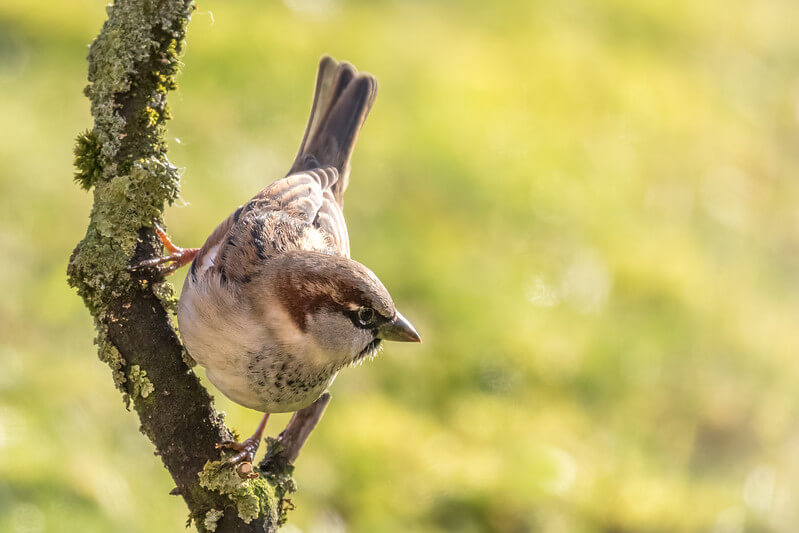
What to Look For:
Chunky, brown back with black streaks
Males have a grey cap and black throat
Females are plainer brown and lack the bib
Where You Might See It:
In noisy flocks near houses, hedges, rooftops
Around feeders or nesting in eaves and crevices
Sound:
Repetitive cheeping and social chirps
🎧 Hear it on RSPB »
🟫 Chiffchaff
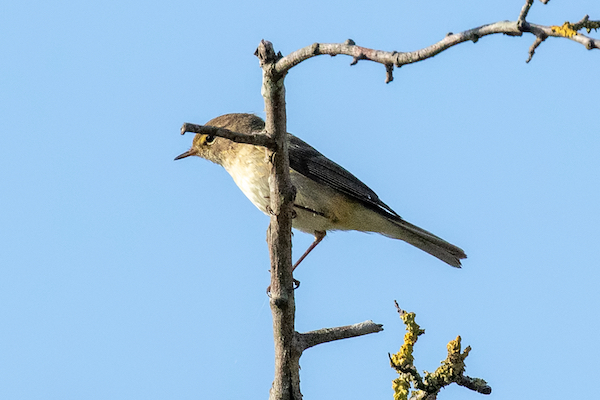
What to Look For:
Small, plain warbler with olive-brown back and pale underparts
Constant tail flicking is a giveaway
Easily confused with the Willow Warbler
Where You Might See It:
In hedgerows, woodland edges, and parks in spring/summer
Often flits through branches searching for insects
Sound:
🎧 Listen to the song of the common chiffchaff, steady, simple, unmistakable.
You’ll also hear my footsteps, a breath or two, and another sound in the distance.
A mammal calling now and then. I know what it was. but do you?
🆚 Chiffchaff vs Willow Warbler
These two warblers are almost identical at first glance, both small, brownish-green birds that arrive in spring. But with a little practice, you can tell them apart by their behaviour, build, and song.
- 🟫 Chiffchaff: Shorter wings, darker legs, constantly flicks its tail
Song is two-note: “chiff-chaff, chiff-chaff” - 🟩 Willow Warbler: Longer wings, paler legs, tail usually still
Song is a sweet, descending series of notes, more melodic
Still unsure? Look at tail movement and listen carefully, sound is the best clue!
⚫ Black & Black-and-White Birds
These birds are bold and often striking against the greenery. Whether it’s glossy black plumage or sharp patches of black and white, these are some of the UK’s most recognisable birds, by sight and by sound.
⚫ Coal Tit
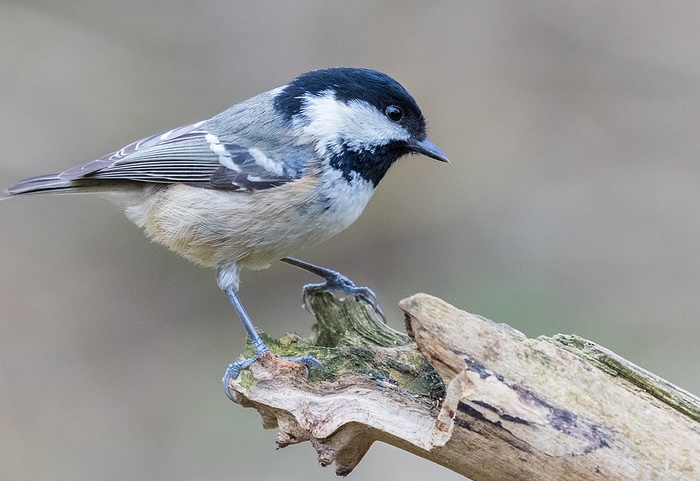
What to Look For:
Small size, black cap, white cheeks, and a white neck patch at the back
Buff belly and fine beak
Often nervous and flits quickly in and out of feeders
Where You Might See It:
Visiting feeders in winter
Prefers conifers, but increasingly common in gardens
Sound:
Thin “see-see-see” call and short buzzing trills
🎧 Hear it on RSPB »
⚫ Pied Wagtail
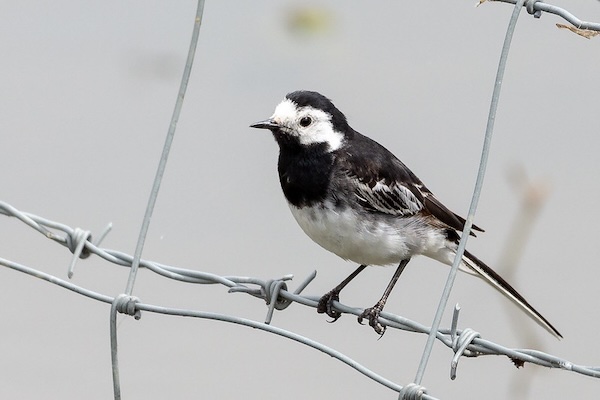
What to Look For:
Small black-and-white bird with long wagging tail
Constant tail-bobbing when walking
Flight is bouncy and often low to the ground
Where You Might See It:
Urban pavements, parks, car parks, riversides
Feeds on insects and always on the move
Sound:
Sharp “chissick!” call, often heard in flight
🎧 Hear it on RSPB »
⚫ Blackbird (Male)
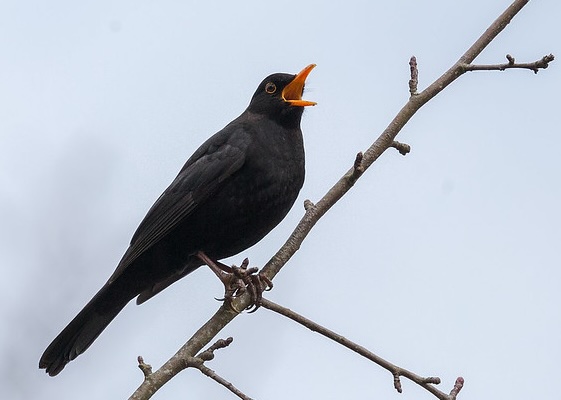
What to Look For:
Males are jet black with a bright yellow bill and eye ring
Females are brown with streaky throats
Often seen hopping on lawns and flicking leaves
Where You Might See It:
Gardens, parks, hedgerows and woodland paths
One of the first birds to sing at dawn
Sound:
Melodic, fluting song, rich and varied
🎧 Hear it on RSPB »
⚫ Jackdaw
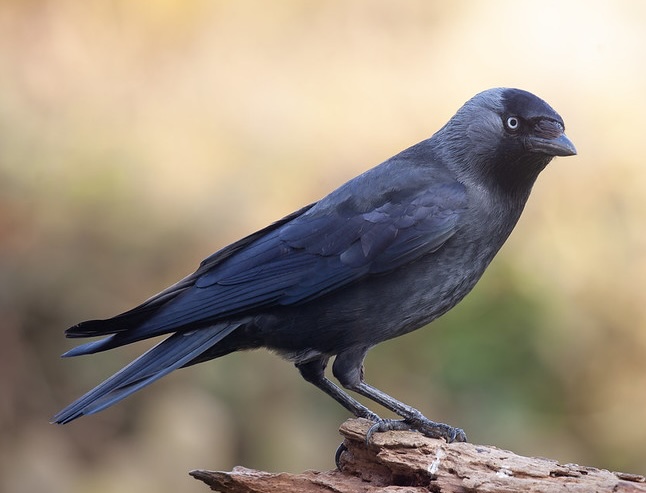
What to Look For:
Black body with a silvery-grey nape
Smaller than a crow, with a steep forehead and pale blue eyes
Inquisitive and highly social
Where You Might See It:
Town centres, chimneys, woodlands, churchyards
Often nests in chimneys and towers
Sound:
“Jack-jack!” call, short and metallic
🎧 Hear it on RSPB »
⚫ Great Spotted Woodpecker

What to Look For:
Boldly black and white with large white shoulder patches
Bright red under the tail; males also have a small red patch on the nape
About the size of a starling, often clinging upright to a trunk
Where You Might See It:
Woodland, parks and gardens
Comes to peanut feeders and fat balls, especially in winter
Sound:
A sharp, explosive “kik” call; in spring, a fast burst of drumming on a dead branch
🎧 Hear it on RSPB »
⚫ Starling

What to Look For:
Glossy black at a distance, with a green and purple sheen and pale buff spots up close
Pointed bill, yellow in spring and darker in winter
Short tail and a spiky, upright shape; usually in noisy flocks
Where You Might See It:
Gardens, lawns, rooftops and farmland
Probes the grass for grubs and crowds onto feeders and fat balls
Sound:
A rambling medley of whistles, clicks and squeaks, often mimicking other birds and even phone ringtones
🎧 Hear it on RSPB »
🆚 Coal Tit vs Great Tit: Spot the Difference
Both are black-capped garden visitors, but once you notice the details you can tell them apart:
- ⚫ Coal Tit: Tiny and quick, with a white patch on the back of its neck, thinner bill, and no strong chest colour
- 🟨 Great Tit: Larger and bolder, with a yellow chest and thick black stripe down the centre, and glossy black head
Coal Tits tend to dart in and out quickly at feeders. Great Tits are more confident and often dominate the peanut station!
🟩 Green Birds
Though not always bright lime green, these birds have olive or mossy green tones that help them blend into foliage. Look closely: their colours and behaviour make them stand out once you know what to watch for.
🟩 Green Woodpecker
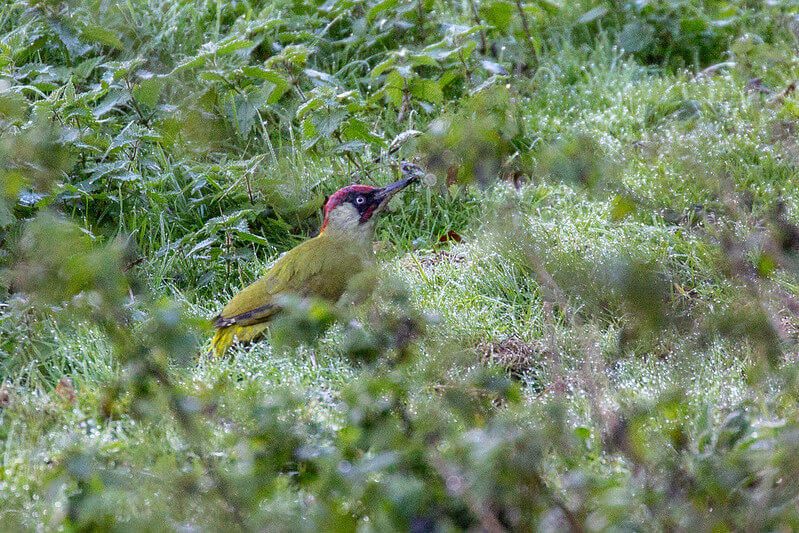
What to Look For:
Mossy green back, bright red crown, yellow rump
Black mask-like eye marking
Often seen on lawns searching for ants
Where You Might See It:
Lawns, meadows, golf courses, parkland
Less likely at feeders, but bold in open spaces
Sound:
Loud, laughing “yaffle” call, often while flying
🎧 Hear it on RSPB »
🟩 Greenfinch
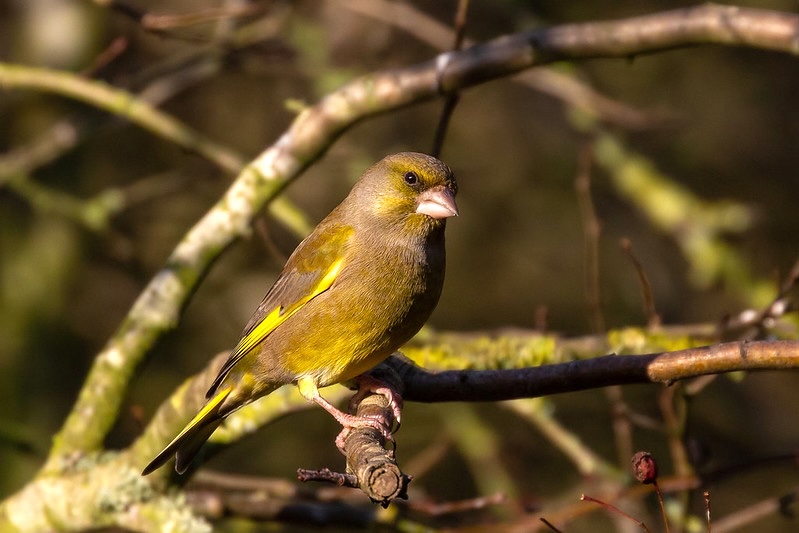
What to Look For:
Olive-green plumage with yellow wing bars
Chunky body and thick finch beak
Females are duller but similar in shape
Where You Might See It:
At seed feeders, especially sunflower hearts
Also in hedgerows, scrub, and gardens
Sound:
Harsh “dzwee” wheeze and trills
🔝 Back to top
🟩 Willow Warbler
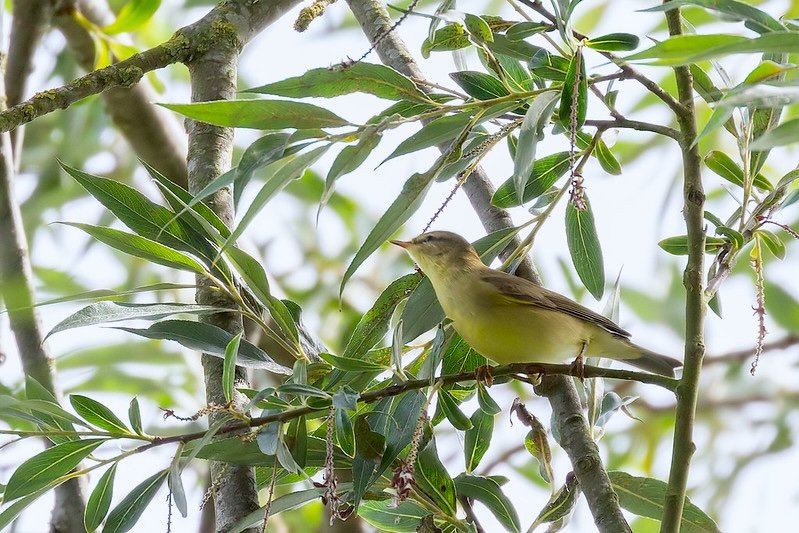
What to Look For:
Pale yellow-white underside, olive-green back
Thin pointed bill, long primary feathers
Very similar to Chiffchaff, but with pink legs and longer wings
Where You Might See It:
Woodland edges, scrubby fields, spring hedgerows
Arrives in spring and departs by early autumn
Sound:
Sweet, descending series of notes, more melodic than a Chiffchaff (ignore the dog panting in the background)
🔝 Back to top
Ready to Keep Exploring?
Whether you've spotted your first Blue Tit or finally put a name to that bouncing blackbird on the lawn, I hope this guide helped bring the birds around you into sharper, more joyful focus.
Every walk, window view, or feeder visit is a chance to see something new, even in the most familiar places. Birdwatching is about noticing small things and finding wonder in the everyday.
A lot of identification comes down to reading feather patterns: the bars, streaks and spots that separate one brown bird from the next.
Want to go deeper? You can explore my full bird profiles, photography tips, or subscribe to my Wild Lens newsletter below for seasonal stories and sightings.
For more British wildlife guides, from ducks and woodland birds to butterflies and the odd mammal, start at the wildlife hub and follow whatever catches your eye.
Birds know no boundaries, and neither should your curiosity.
Step Behind the Wild Lens
Seasonal field notes from my wildlife walks: recent encounters, the story behind favourite photos, and simple, practical tips you can use on your next outing.
Copyright © 2018- naturewalkswithcarol.com All rights reserved
Home. | About Me | Contact Me | Blog | Privacy Policy