- Home
- Photo Basics
- Wind Direction
Best Wind Direction for Head-On Bird Flight Photos (on Windy Cliffs)
1-minute takeaway: Wind at your back + sun at your back → quartering head-on angle (30–45°) → stand a few metres back in the lift lane → shoot against sea or sky backgrounds. That one combination gives you slow approaches, front-lit detail, and clean frames.
The core rule: birds tend to fly into the wind (and why that helps head-on shots)
The best wind direction for head-on bird flight photos is one that puts the wind at your back, because many birds take off, land, and manoeuvre into the wind, meaning they'll approach you slowly and predictably. Stack the sun behind you too for clean, front-lit detail on the face and underwings.
On windy cliffs, find the updraft “lift band” where birds repeatedly pass at eye level, then position yourself for a quartering head-on angle (roughly 30–45° off straight-on) rather than true head-on: it's more forgiving for autofocus and typically gives the best keeper rate.
For head-on flight photos, you're looking for one thing above all: slow, predictable approaches.
The useful field rule is that many birds prefer to take off and land into the wind, and when they're flying into a headwind they move more slowly over the ground.
That's the behaviour that matters for head-on shots, not cruising flight, where birds fly whichever direction suits the route and the energy cost, including with a tailwind when it helps them.
Who this is for
This guide is written for exposed coastal cliffs and headlands in moderate to strong wind (Beaufort 4–6, roughly 13–30 mph).
It works best with soaring and gliding species that actively use cliff lift: gulls, fulmars, gannets, kittiwakes, choughs, ravens, puffins, and raptors riding updrafts.
Much of it also applies to other windy, open landscapes (hilltops, ridgelines, moorland). It's less directly useful for sheltered habitats or small passerines, where wind plays a smaller role in flight behaviour.
If you've seen advice saying birds “tend to fly with the wind,” that's often talking about long-distance travel, not the low-speed control that gives you head-on opportunities on a cliff.
Here's why the distinction matters in plain English. Birds need a certain airspeed (speed through the air) to create lift. When facing into a headwind, they can maintain that airspeed while covering less ground per second. For you, that often means:
- More time to acquire focus
- More frames as the bird comes towards you
- Fewer blink-and-you-missed-it flybys
And a windy cliff adds a twist: sometimes birds aren't only responding to wind direction, they're working a lift corridor created by the shape of the land, so their “lane” can be set by the cliff as much as the breeze.
You might be cold and uncomfortable (I certainly was when I first experienced this on a ferociously windy day in late June) but the potential photos you can get are worth it.
And if you're on an exposed edge in gusts, you'll know the sensation, that odd moment where it feels like someone shoved you from behind when there wasn't even anyone there.
Take that as information: the wind is strong, it's changeable, and you need to give it more respect than your camera settings.

Quick reference: 5 wind × sun scenarios
In the field, wind and sun rarely line up perfectly. Here's what to expect from the five combinations I run into most often on cliffs, and which shooting angle to commit to for each one:
Birds approach into the wind facing you; light falls on faces, eyes, and underwings. Make the most of it. These conditions don't last all day.
Commit to: head-on or quartering
Cross-light adds depth and feather texture. Shift a few metres along the cliff so the sun falls on the side of the bird facing your lens.
Commit to: quartering head-on
Birds pass across you rather than head-on, but may angle their bodies into the crosswind, making them look surprisingly “toward you.”
Commit to: side-on or quartering
Lean in rather than fight it: silhouettes, rim-lit wings, and backlit drama. Meter for the sky, let the bird go dark.
Commit to: backlit head-on or quartering
Birds fly away from you, and you're fighting the light. Pivot: turn around for departing/banking shots, or move to a different cliff section where the terrain redirects the lift band.
Commit to: side-on departures or relocate
The best wind direction is the one that puts wind behind you AND light behind you
If you only remember one principle for classic, front-lit bird-in-flight: stack the advantages.
Wind behind you often encourages birds flying into the wind to face your way on approach, and it can slow their ground speed.
Sun behind you gives you clean light on the face, the eye, and the underwings, the detail that makes a flight image feel alive.
The catch is that wind and sun don't always cooperate. Wind in your face can still mean birds are facing you, but you'll often fight shadows (or even silhouettes) unless you decide to lean into backlight creatively.
Beautiful light but the wind “wrong” can still produce excellent photos. It simply nudges you toward quartering or side-on passes rather than insisting on straight-on.
One small clarity point that saves confusion in the field: when I say “wind at your back” I mean the practical version, that you feel on the back of your head/neck at the cliff edge.
Wind → Approach Angle: how to choose your standing position (the 3-angle model)
Wind direction tells you a lot, but the keeper rate is often decided by something more controllable: the approach angle you choose to shoot.
Think of it as how the bird's flight path intersects your lens axis. You're deciding whether you want:
- A bird coming straight at you (dramatic, unforgiving)
- A bird coming slightly across you (often the sweet spot)
- A bird passing side-on (cleanest fallback when wind and sun argue)
Option A: True head-on (harder, less forgiving AF)
True head-on looks powerful, but it's tricky. The bird is a narrower target, distance changes fast, and tiny tracking errors show up as soft eyes or missed focus. It's worth persisting when birds are gliding steadily, or when they “hang” briefly in lift and give you a moment to lock on.
Option B: Quartering head-on (often the sweet spot)
This is the angle that quietly rescues a lot of cliff days. I aim for the sweet spot of a bird heading straight towards me, but in reality, I get my best keeper rate when it's about 30–45° quartering.
I still get that feeling of approach and engagement, yet the wings give autofocus more shape and contrast to grab. Eye-tracking AF can help enormously when it's behaving, and a clean background (sea or sky) often makes the whole frame feel more pleasing.
It's also kinder compositionally.
With a quartering line, you can often position yourself so the bird arrives against a cleaner patch of background, rather than forcing it against land clutter and hoping the camera sorts it out.
Option C: Side-on (best fallback when wind/sun conflict)
Side-on isn't a consolation prize. It's often the most readable flight image you can make: full wing geometry, plumage detail, and a background that's easier to manage.
And sometimes wind creates a little illusion you'll recognise: in a crosswind, birds may angle their bodies into the wind to avoid being drifted off line. That can make them look more “toward you” than their actual track across the scene.
If you notice that, don't fight it, use it. You can still make frames that feel engaged, even when the lane isn't truly head-on.
Windy cliff modifier: finding the lift band so birds fly at eye level
The cliffs at Bempton and Flamborough Head are perfect places to put this into practice, with gannets, kittiwakes and puffins flying past at eye level.
This is the cliff advantage, and it's why windy headlands can feel like cheating (in the best possible way).
When wind hits a cliff or slope, it gets deflected upward and creates a rising stream of air (orographic uplift), if you want the proper term. Birds that know the place will work that lift and give you repeated, level passes at a consistent height.
What does that long word mean? Think of it like this:
- Wind = a moving escalator
- Cliff = the base of the escalator
- Bird = someone stepping on and riding up
The bird isn't working harder. It's using what the wind is already doing.
How the lift band works
Imagine you're looking at the cliff from the side. Wind blows in from the sea and hits the cliff face. It can't go through the rock, so it's forced upward along the cliff, creating a band of rising air just in front of and above the edge.
That's your lift band, an invisible corridor of upward-moving air that runs parallel to the cliff top.
Birds slot into this corridor because it's free energy: they can glide, hover, or “kite” without flapping, saving effort while they patrol, hunt, or simply travel along the coast.
The lift band is typically strongest closest to the cliff edge and weakest as you move inland. Its height depends on wind speed and cliff shape: steeper cliffs and stronger winds push the band higher.
Your standing position matters: too far back from the edge and birds pass above you; too close and you're in the turbulent zone right at the lip (and in a dangerous spot).
The sweet spot is usually a few metres back from the edge, where the lift band delivers birds at or just above eye level against a clean backdrop of sea or sky.
The trick is not guessing. It's watching long enough to see the pattern.
I know I'm in the lift band when there's consistency in the route taken by most of the birds. If they use the same feature to turn beside, or hang at the same point, it tells a story.
Look for that “invisible line” where bird after bird appears at the same height, as if the air has drawn a track in the sky.
A few practical cues to help you spot it quickly:
- Repeat passes at the same height relative to the cliff edge
- Hang time: birds pause or “kite” with minimal flapping in one patch of air
- A clear turn point: a notch, corner, buttress, or change in cliff angle where birds repeatedly reverse direction
- Traffic lanes: multiple birds spaced out along the same corridor, like an aerial runway
Once you've found it, “where to stand” becomes clearer: you're aiming for a spot where birds enter that lane at a workable distance, and you can place them against a clean slice of sea or sky.
Quick field checklist (30 seconds before you start shooting)
- Check wind: what is it actually doing at the cliff edge (feel it, watch grass, wave tops, spray)?
- Check sun: where is the light coming from now, and where will it be in 30 minutes?
- Watch for 2 minutes: where do birds appear, where do they turn, what height line repeats?
- Pick a background: sea/sky beats land clutter for both autofocus and aesthetics.
- Commit: choose head-on, quartering, or side-on. Stop chasing every bird and start predicting lanes.
If the wind is ‘wrong’: 4 ways to still get keepers
“Wrong” usually means wind and light won't align, or the birds aren't flying the lane you planned for.
If the wind won't play nicely, I don't admit defeat, I change the goal. Instead of insisting on straight head-on shots, I pivot to banking shots or backlit drama. Here are four reliable pivots that work particularly well on cliffs:
Switch to banking/turning shots
Turns are where wings look sculptural and expressive.
Birds often bank as they reposition into wind or swing back into the lift lane. If you learn the turn point, you can pre-compose and let the bird enter your frame already doing something interesting.
Focus on landings/takeoffs or approach-to-perch behaviour
Many birds prefer to take off into the wind, which can make the “last few metres” more repeatable than mid-route flight. On cliffs, this might be birds returning to ledges or approaching favoured perches. Keep a respectful distance, and if it's a nesting area, let ethics lead.
Embrace backlit drama
If you've got wind helping the approaches but sun in your face, silhouettes and rim light can be spectacular: graphic wing shapes, glowing edges, and moody skies.
Meter for the sky, let the bird go dark, and make it a design.
Choose behaviour over perfection
When flight lines are messy, look for moments that tell a story: interactions, food passes, hovering, aerial squabbles, carrying material. If you come home with behaviour and mood, you've won.
Common mistakes (and fixes) for head-on flight in wind
Standing “right for wind”, wrong for sun
Move to stack wind + light when you can. If you can't, stop trying to force front-lit head-on and commit to side-on or backlit with intent.
Chasing birds instead of predicting lanes
Watch for two minutes. Identify the height line and the turn point. Pre-compose and let birds fly into your frame rather than sprinting after every pass.
Ignoring cliff-edge safety in strong gusts
Treat gusts as a hard boundary, not a challenge. Stay well back from edges, especially on wet grass, loose ground, or exposed headlands where wind can upset your balance. If your stance feels unstable, that's your cue to step back or stop.
Disturbing nesting birds (or photographing in a way that encourages others to)
Never prioritise a frame over welfare. Be extra cautious around colonies and ledges; avoid flushing birds or causing repeated alarm flights. Keep distance, use longer focal lengths, and don't share precise nesting locations.
FAQ
Is wind at your back always best?
Not always. It's best when it also gives flattering light and a clean background. Wind behind you can make approaches more predictable, but cliffs can create sideways lift corridors, and crosswinds can change how birds present:,so sometimes the “best” position is quartering or side-on even on a seemingly perfect wind.
What wind speed is too much?
There are two limits: your safety and your stability. If gusts are strong enough to affect your balance on an exposed edge, treat that as a stop signal. From a photography point of view, very strong winds can also make flight paths more erratic around cliff features, but the bigger limiter is often you, not the bird.
Why are birds coming from the side even in a headwind?
Because wind doesn't fully dictate travel direction. Birds often fly where they want to go (a colony, a feeding line, the strongest lift corridor), and they may angle their bodies into a crosswind to avoid being drifted off track. On cliffs, the landscape can set the lane as much as the wind does.
A few things worth knowing about the limits
The techniques above work best in the conditions described at the top of this article: exposed coastal cliffs, moderate-to-strong onshore wind, soaring species. But a couple of things are worth flagging for the field.
In lighter winds (below Beaufort 4, roughly under 13 mph), the lift band may be too weak to create reliable flight lanes. Birds still fly, but their paths are less predictable and less tied to terrain features. You'll be relying more on habitat knowledge than wind positioning. In very strong winds (Beaufort 7+, above 30 mph), flight paths become more erratic around cliff features, and your own safety on an exposed edge becomes the real limiting factor.
Species matter too. Shearwaters, for instance, use dynamic soaring over open water in ways that don't map neatly onto the cliff lift-band model. And while short-eared owls quartering a hillside will often work into the wind (making them great subjects for these techniques), small passerines darting between hedgerows respond to wind very differently from a fulmar riding a cliff face.
A note on ethics and UK law
Wherever you photograph nesting birds or breeding colonies, keeping a respectful distance isn't just good practice, for certain species in the UK it's a legal requirement. Under the Wildlife and Countryside Act 1981, it is an offence to intentionally or recklessly disturb any wild bird listed on Schedule 1 at, on, or near an active nest. That includes many cliff-nesting species you're likely to encounter.
Even for species not on Schedule 1, repeatedly flushing birds from nests or causing alarm flights can have real welfare consequences, especially during incubation or when chicks are small. The law sets a minimum standard; good field ethics should always go further.
My rule of thumb: if a bird changes its behaviour because of where I'm standing, I'm too close. Move back, use a longer lens, and let the bird carry on as if you weren't there. No photograph is worth more than the subject's wellbeing.
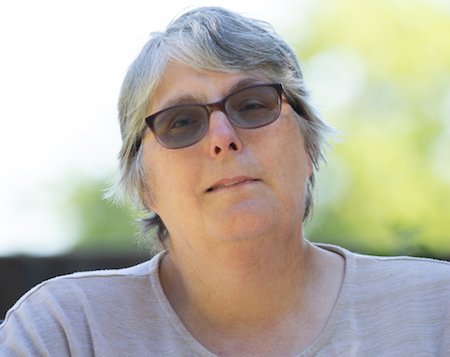
I've spent over 30 years walking and photographing UK wildlife, with work featured in Canon EOS Magazine and a Wildlife Trusts calendar. I still learn something new on most outings.
This site is my field notebook full of photo tips, help on identifying what you see, and how to decide where to walk. About Me.
Step Behind the Wild Lens
Seasonal field notes from my wildlife walks: recent encounters, the story behind favourite photos, and simple, practical tips you can use on your next outing.
Copyright © 2018- naturewalkswithcarol.com All rights reserved
Home. | About Me | Contact Me | Blog | Privacy Policy